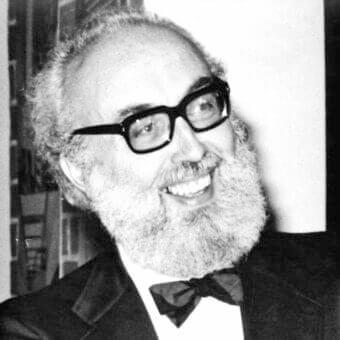
Architect, designer, sculptor, Angelo Mangiarotti was a leading figure in the art and design worlds with an eclectic career that saw him involved in projects of various types, from product design to sculpture and architecture. Born in Milan in 1921, he obtained his degree in Architecture from the Milan Polytechnic. Subsequently, he worked on the design of the Milan Triennale in 1948. A few years later, he went to the United States as a visiting professor and came into contact with some of the greatest 20th century architects, including Frank Lloyd Wright, Walter Gropius and Ludwig Mies van der Rohe. In 1955, he returned to Milan and founded a design firm with his colleague Bruno Morassutti. His work focused mainly on residential buildings – including the Feltre district in Milan – and product design. The first version of his famous “59” chair dates to this period.
In 1961, after closing his office, he became a consultant for Alfa Romeo, designing a wind tunnel to study and prototype cars. In 1967, he designed two lamps for Artemide – “Lesbo” and “Saffo” – distinguished by a polished metal base and a Murano glass body that produces soft atmospheric light. Among Mangiarotti’s most recognizable designs are those for Agape. The modular wood “Cavalletto” bookcase, designed in 1953 and reissued in a new version, uses a trestle element, which can be stacked by means of a simple joint to create a veritable interlocking system of shelves or containers. A versatile system that can be assembled in an infinite number of configurations, Cavalletto combines elegance and function. The “Tre3” chair, designed in 1978 and still on the market today, has a leather shell and is distinguished by its three rectangular wooden legs, joined by a transverse T-shaped structure, making it a highly recognizable piece of modern design. Also designed for Agape are the plywood Quadrotto table and the Eros and Eccentrico Carrara marble tables.
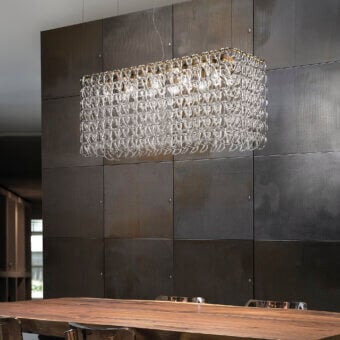
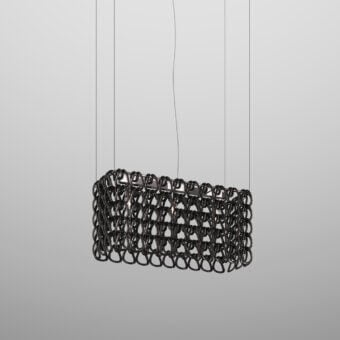
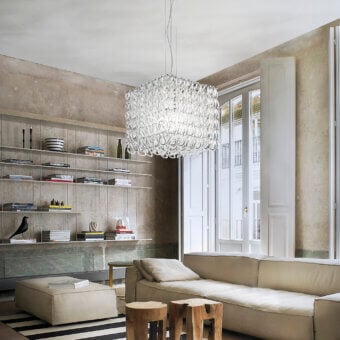
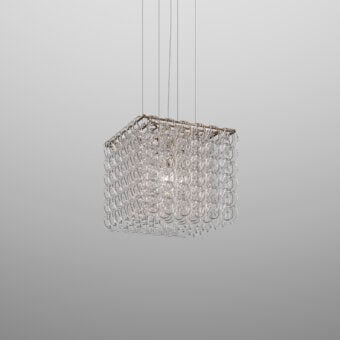
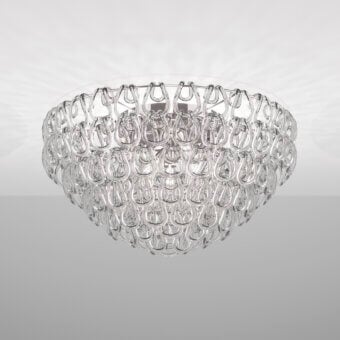
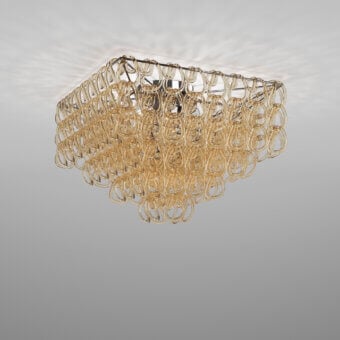
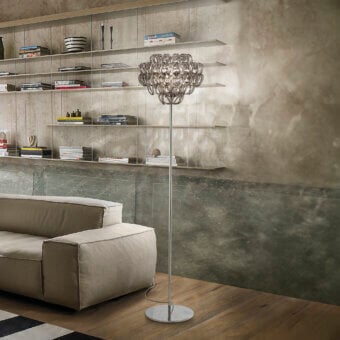
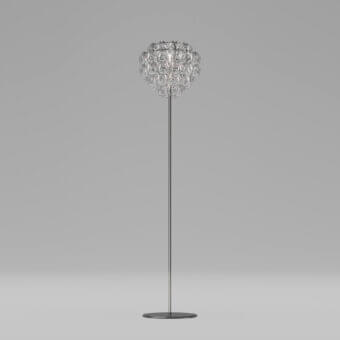
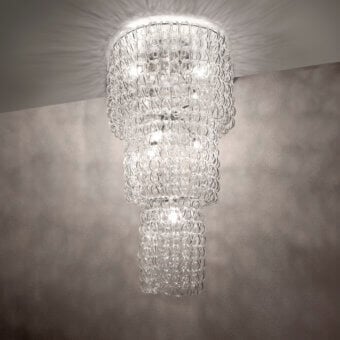
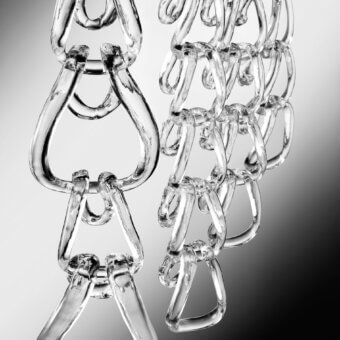
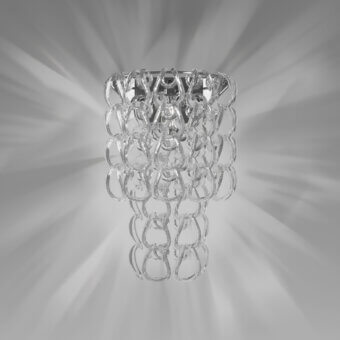
For Zanotta, Mangiarotti created “IN 301”, an armchair considered emblematic of Italian design, in the permanent collection at the Triennale in Milan. From 1986 to 1992, he was art director for the Colle Cristalleria creating objects mainly in crystal. Other notable collaborations include those with Knoll and Cassina. One of Mangiarotti’s most notable creations is the “Giogali” collection, designed for Vetreria Vistosi, featuring a modular crystal hook making it a versatile element that can be used as a wall, ceiling or table lamp. Mangiarotti died on June 30, 2012. He was 91.