Material Focus: Italian Marble in Contemporary Design

A legacy of stone, reborn in modern interiors with elegance, precision, and soul.
Italian marble is more than a material, it’s an icon. Quarried for centuries and used in everything from Renaissance sculpture to contemporary furniture, it’s a symbol of permanence, purity, and elevated living. And while its legacy is rooted in the past, marble has never felt more current.
 (Rome, Italy)
Today, Italian marble is being reinterpreted through sleek silhouettes, bold contrasts, and unexpected applications, from fluid lighting pieces to sculptural furniture and minimalist surfaces that let nature’s artistry shine.
Here’s why Italian marble remains at the core of sophisticated interior design, and how designers are using it to shape the homes of tomorrow.
🏔 A Heritage Carved in Stone
 (Turin, Italy)
Italy is home to the most prized marble quarries in the world, including Carrara, Calacatta, and Statuario, each with unique veining, tone, and prestige.
Carrara’s soft greys and fine grains have long been favored by sculptors, from Michelangelo to modern masters. Calacatta, with its bolder gold and grey veins, is dramatic and architectural. Statuario, often reserved for luxury interiors, is prized for its luminous white base and fluid veining.

(Skorpio Keramik Table by Cattelan Italia)
The appeal of these marbles lies in their natural variation. No two slabs are the same, each one a landscape of texture, movement, and quiet drama.
🧊 Cool Luxury with a Warm Soul
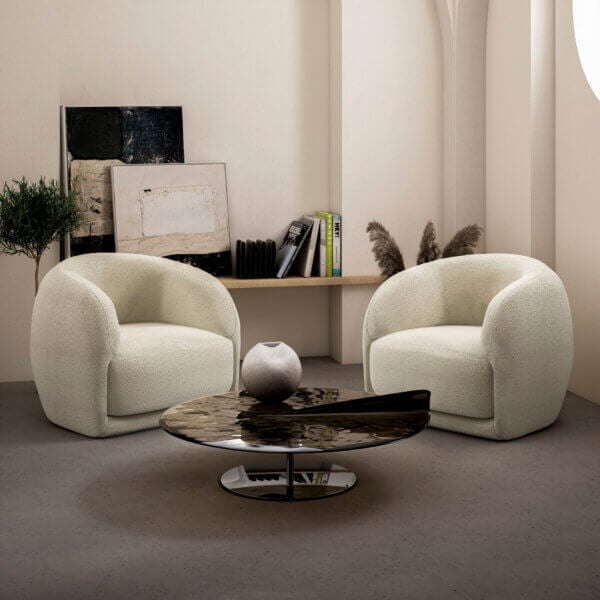
 (Illo Coffee Table by Miniforms)
Marble’s elegance lies in contrast: it’s cool to the touch, yet visually warm. Solid and enduring, but often used in delicate, refined designs.
Modern Italian designers are embracing marble in both monolithic furniture and subtle accents, from thick-top dining tables to slim sideboards, pedestal bases, and sculptural objects. Honed or matte finishes enhance the tactile beauty of the stone, while letting its character take center stage.
The result is luxurious, but never excessive. Marble offers a grounded sense of calm and an invitation to slow down, perfect for today’s quieter, more soulful interiors.
🪞 Material Pairings That Amplify
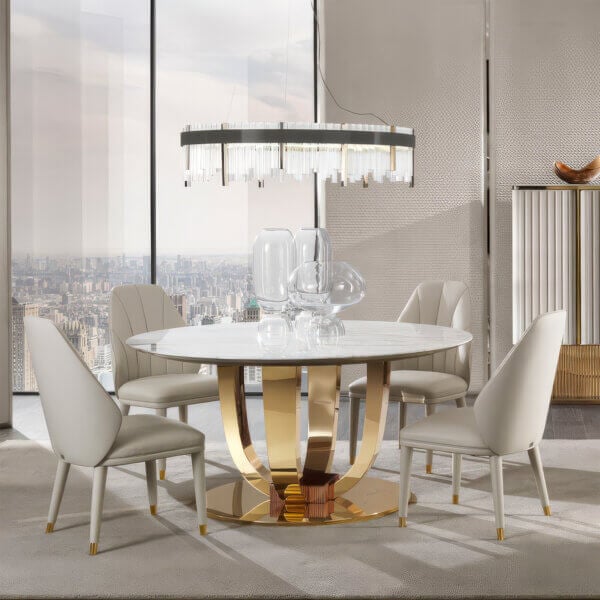
 (Segno Table by Reflex)
Italian marble plays beautifully with materials like brushed brass, dark oak, leather, lacquer, and even glass. The tension between rough and polished, light and dark, organic and industrial, is what gives marble its enduring versatility.
 (Pillar Table by Ditre)
Whether as a tabletop supported by minimalist metal legs or as part of an intricate cabinet inlay, marble can be both the star and the supporting actor, depending on how it’s styled.
It pairs equally well with maximalist spaces (where veins and color add boldness) and minimal interiors (where its form does all the talking).
🛋 From Classic to Cutting-Edge
 (Kyma Side Table by Turri)
Today’s Italian furniture brands are using marble in ways that go beyond classical application. You’ll find:
-
Dining tables with curved marble tops and base-matching veins
-
Coffee and side tables in Nero Marquina, Verde Alpi, or Rosso Levanto
-
Consoles and bars that mix multiple stones for layered contrast
-
Lighting bases and décor pieces with polished stone cylinders and slabs
 (Gordon Keramik Table by Cattelan Italia)
These designs reflect a respect for material, but also a desire to push it forward, bringing centuries-old stone into the language of contemporary living.
🧠 Material as Muse: Marble in the Designer’s Imagination

(Ascot Table by 4Mariani)
In the hands of Italy’s most visionary designers, marble is more than a building block, it’s a creative medium.
Today’s design studios are pushing the boundaries of what marble can be. From ultra-thin slabs shaped into seamless curves to bold mixed-material compositions, marble is being used in ways that feel sculptural, unexpected, and emotionally expressive.
 (Madison Vanity by Turri)
Designers are treating the veining like brushstrokes, the surface like canvas. The result? Objects that are both functional and poetic, where form follows feeling, and material tells the story.
Timeless, elegant, and born of the earth.
🔗 Read More Journal Articles →