The Dining Table shapes the room
How form, proportion, and construction guide the dining space around them.
A dining table establishes the direction of a room before the first chair is placed. Its outline can reinforce the architecture or interrupt it; its base determines where people can sit; its surface changes how much of the room remains visible. Choosing a dining table means thinking through those relationships together.
In Italian dining table design, a sculptural base or expressive material often draws the eye first. The more revealing question is what that design asks of the space around it. Start there, and decisions about seating, lighting, and circulation become easier to resolve.

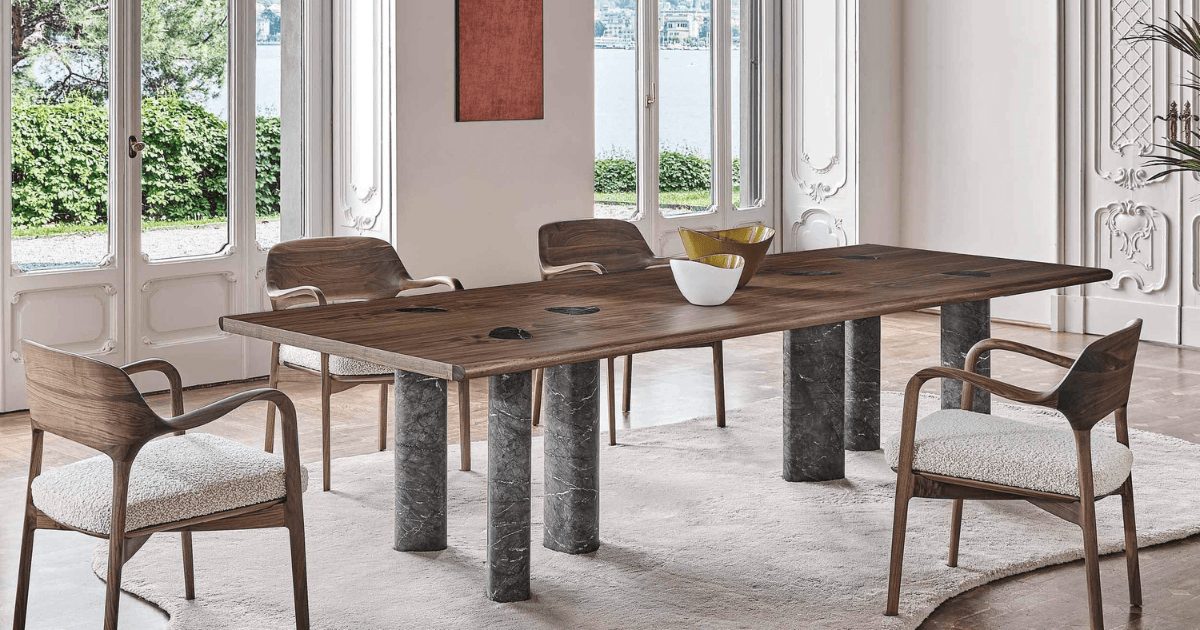
Osmose Rectangular Table by Patrick Jouin for Porada
Choose the direction of the room
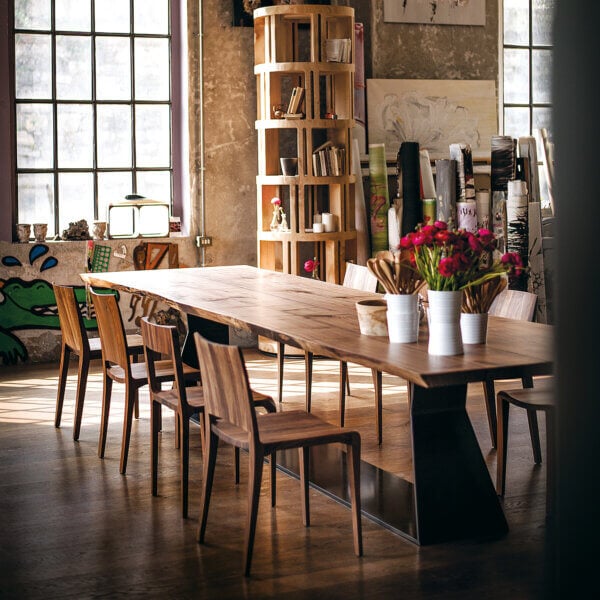
A rectangular table establishes an axis. In a long room, it can connect the composition from one end to the other, giving chairs and a pendant a clear line to follow. In an open plan, the same geometry can define the dining area alongside a kitchen island or living space.
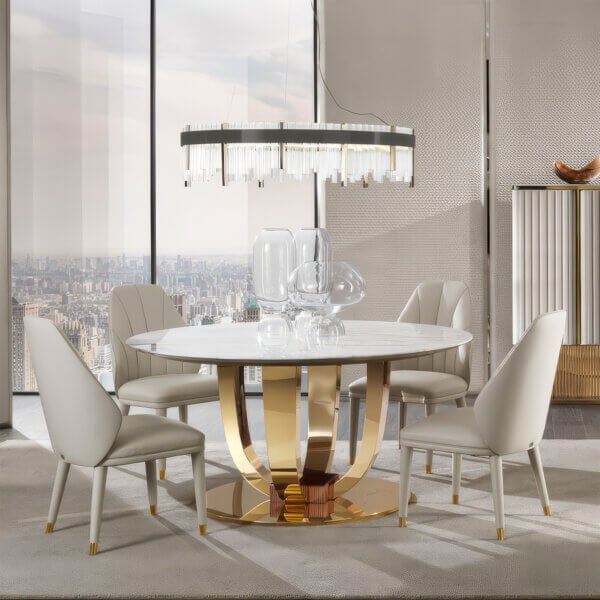
A round table gathers the composition around a center. Its perimeter removes the distinction between long sides and ends, although its diameter still needs careful attention. A large circle can occupy substantial width, especially once chairs are in use.
An oval carries the direction of a rectangle with a gentler outline at either end. Barbara by Horm, offered with oval or round tops and a central concrete base, makes that distinction easy to explore. In the oval version, the curve changes how the table meets the space around it. The benefit depends on where people actually walk.
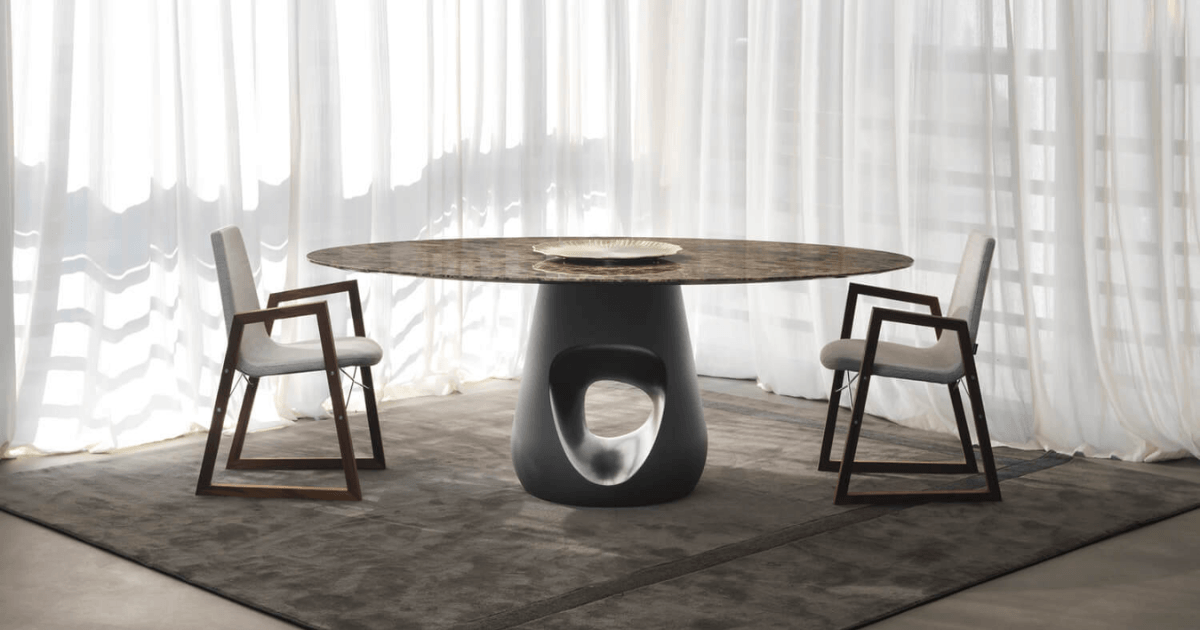
Barbara Table by Renato Zamberlan for Horm
Plan for the occupied room
A table’s dimensions describe only part of its footprint. Add the chairs, then imagine someone seated, another person pulling a chair back, and someone passing behind.
Measure from the table edge to the nearest obstruction, including a sideboard rather than only the wall. A photograph with neatly tucked chairs can conceal the space a dining arrangement needs in daily use.
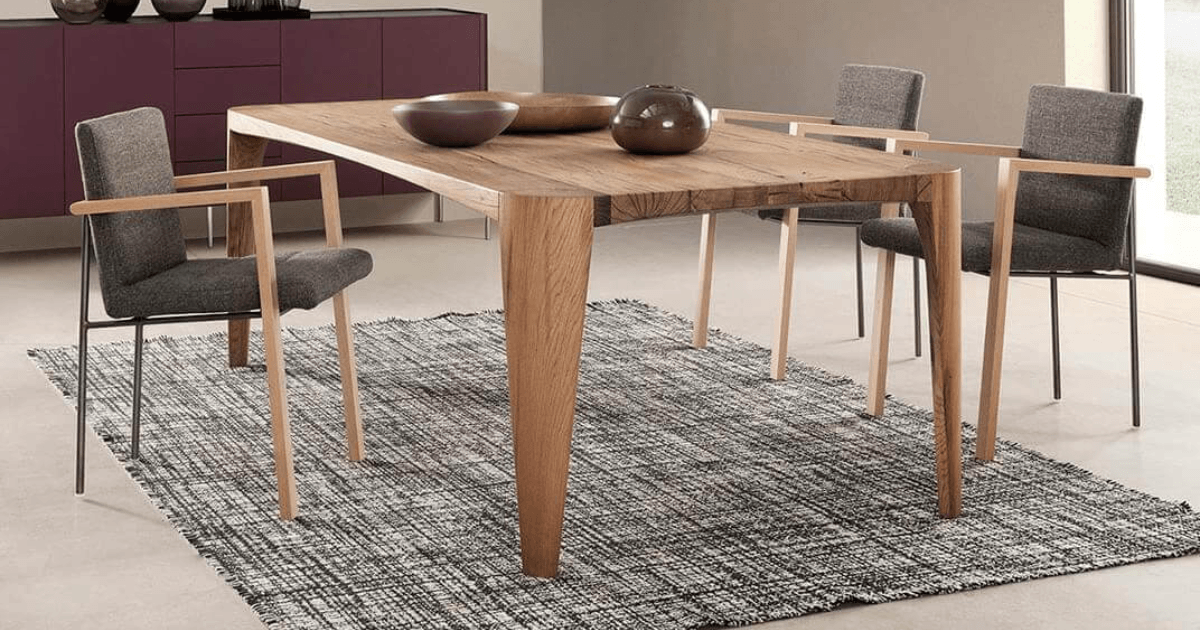
Terra Table by Alessandro Scandurra for Presotto
Look beneath the surface
The base determines how the tabletop can be used. Corner legs, inset supports, and central pedestals create different seating possibilities. A top that appears generous may offer fewer comfortable positions if supports fall where knees or chair legs need to go.
A pedestal can free sections of the perimeter, but its footprint still matters. Check how far the base projects beneath the chairs and how much space remains for feet. With a sculptural structure, map each intended seat against the supports rather than estimating capacity from the top alone.
An extendable design adds another configuration to evaluate. Bonaldo’s Torii Extendable Table combines two inclined metal supports with lateral extensions. Review the layout both closed and fully extended, including the relationship between additional seats, the base, and nearby furniture.
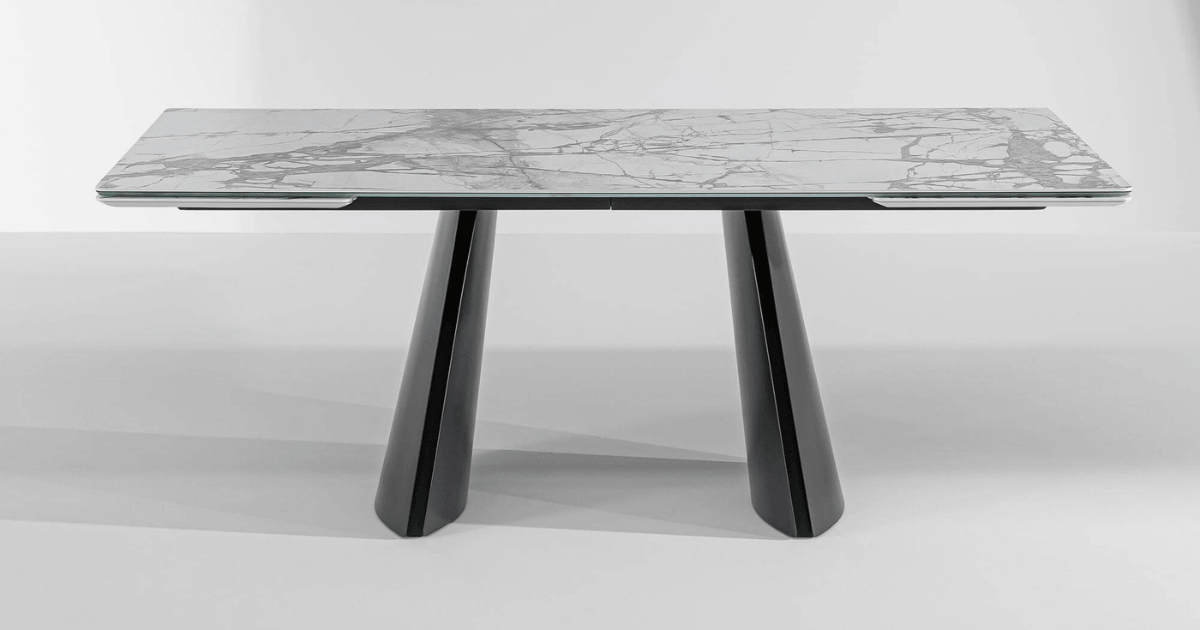
Torii Extendable Table by Marconato & Zappa for Bonaldo
Select chairs alongside the table
Chair width affects spacing; arms and backrests affect the overall composition. Check arm height against the underside of the table, including any apron or mechanism below the top. A chair may sit comfortably at the edge without sliding fully underneath.
Upholstered armchairs also bring more visual volume than slender open frames, so assess the entire group from the entrance to the room.
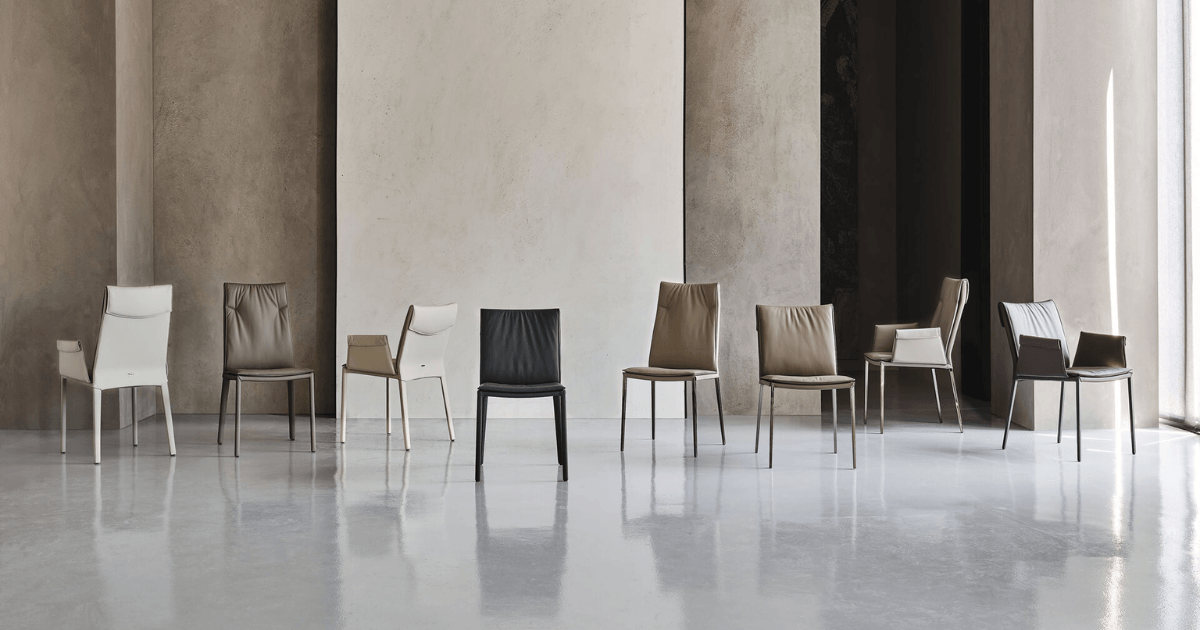
Isabel Chair by Paolo Cattelan for Cattelan Italia
Understand its visual weight
Two tables with similar dimensions can register very differently in a room. An opaque surface gives the eye a continuous plane to read. Grain, veining, edge thickness, and the volume of the base can strengthen that presence. Porada’s Osmose Rectangular Table brings canaletto walnut together with marble legs and matching inserts in the top, making construction part of the visible composition.
Transparent glass reveals more of what sits beneath it. In Lago’s Janeiro Round Table, the clear top allows the sculptural concrete base and surrounding floor to remain visible. That transparency can make the composition feel more open, while placing greater emphasis on the base and chair frames. It changes perception; the physical space required stays the same.
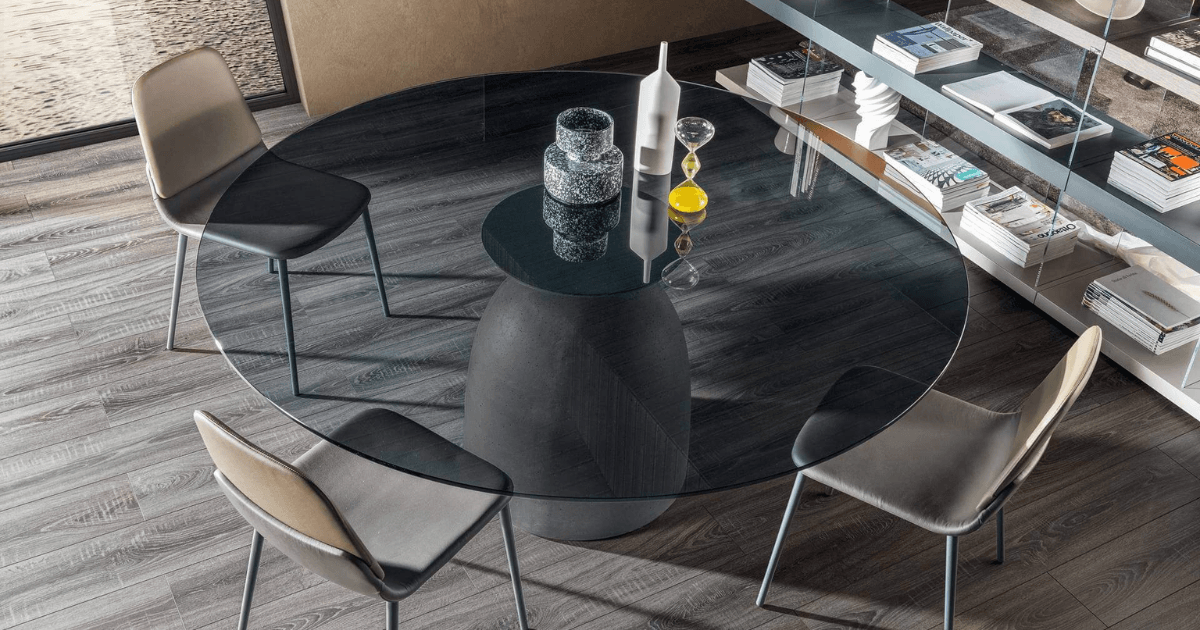
Janeiro Round Table by Bartoli Design for Lago
Let the surrounding pieces respond
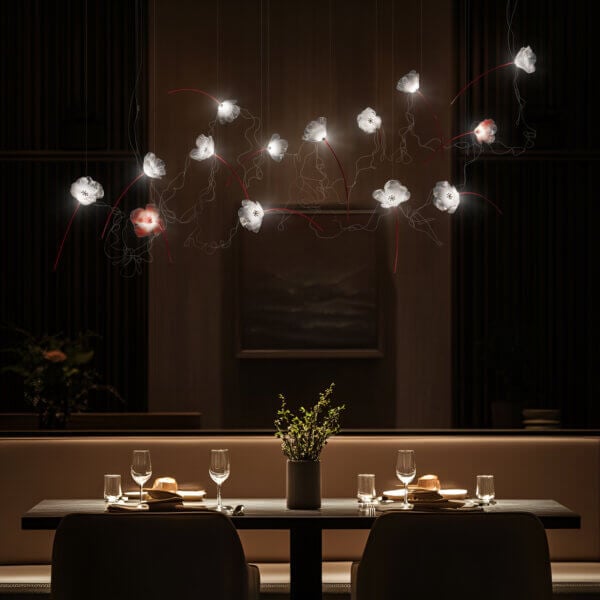
Use the table’s proportions to guide the lighting composition. A linear fixture can emphasize an elongated top; a compact pendant or cluster can reinforce a central arrangement. These are starting points, with the ceiling height and the fixture’s own volume shaping the final choice.
If a rug defines the dining area, allow for chairs to move back while remaining on it. Check sideboard doors and drawers in use, too.
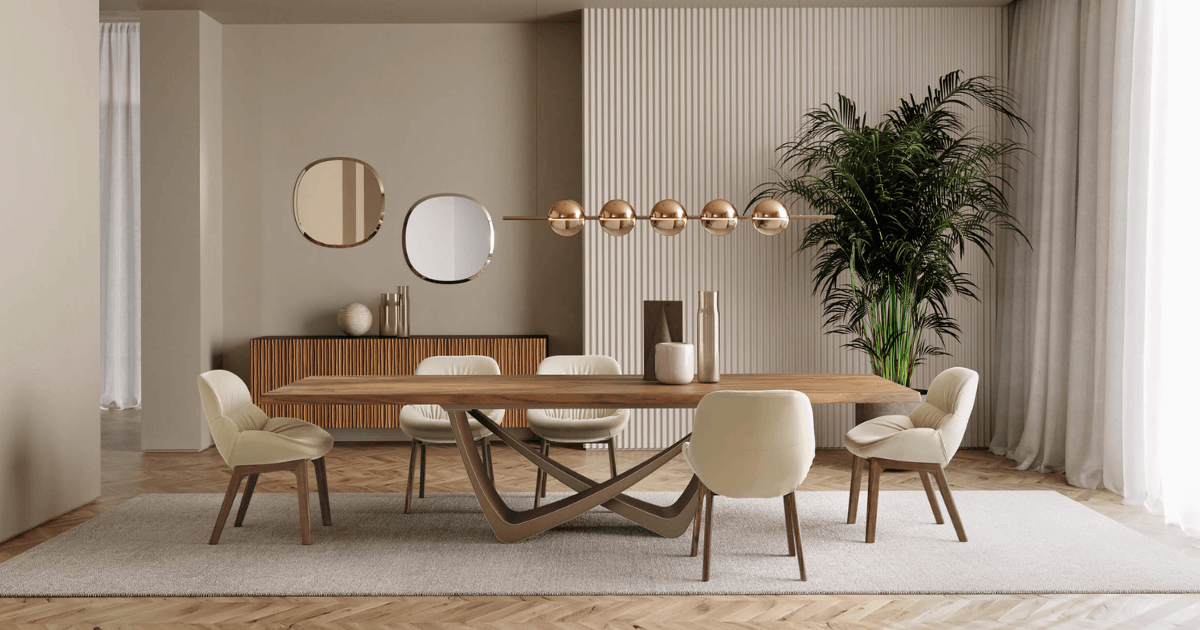
Bach Rectangular Table by Lu.Na Progetti for Bontempi
Bring the decisions together
The right dining table makes sense from several viewpoints: on the floor plan, from the doorway, and from a seated position. Its shape establishes an order that the chairs, lighting, and storage can develop.
Before choosing a configuration, bring together the room dimensions, intended seating, and the pieces that will stay. Those details give material and finish choices a useful context, and help a compelling design become a comfortable part of the room.
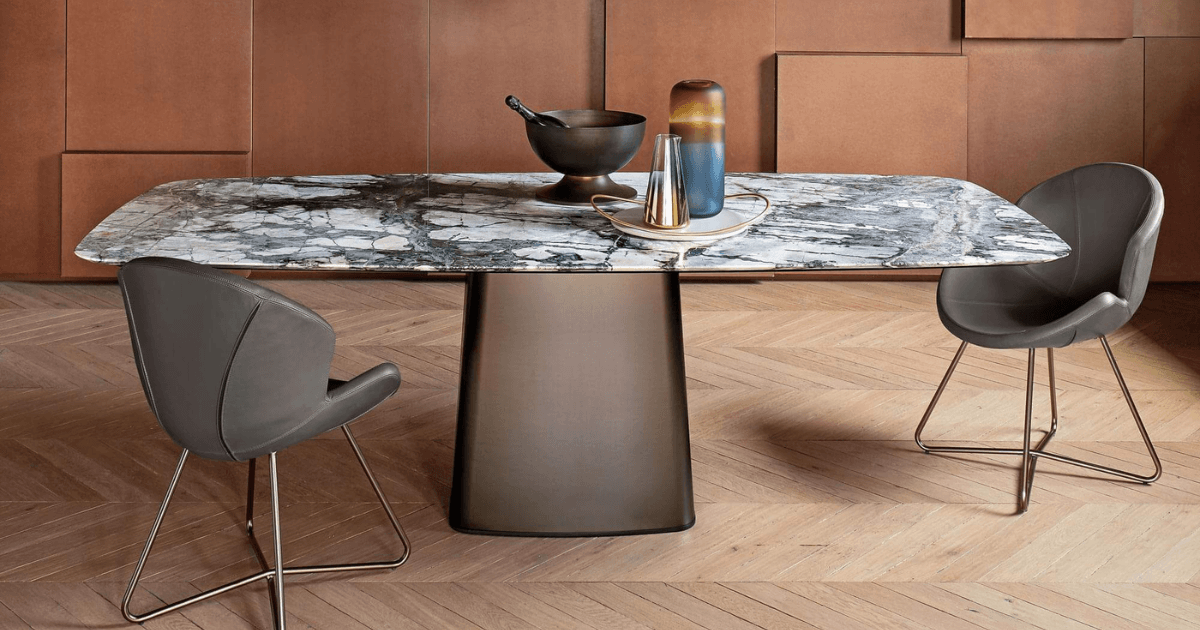
Icon Table by Mauro Lipparini for Arketipo